Source organic hand made steamed green tea for tea blending, retail, and wellness
Find 30 listings for organic hand made steamed green tea from Chinese suppliers. Buyers can compare loose tea and tea bag options with varying packaging and certifications to suit wholesale needs.
Key considerations
Products List


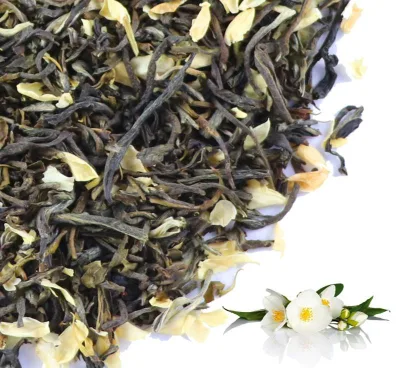
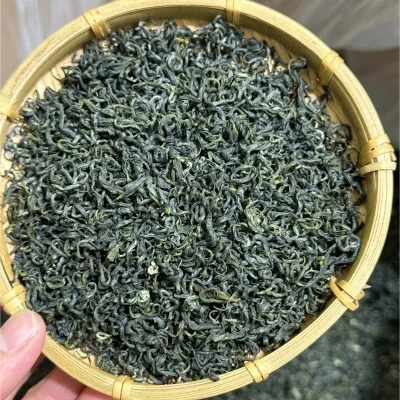


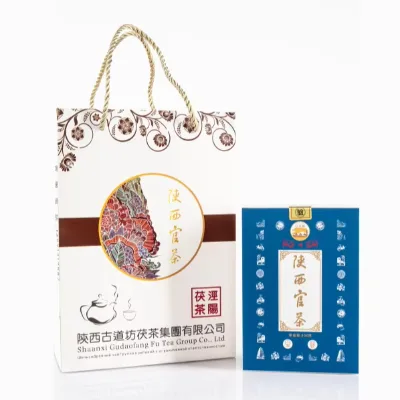
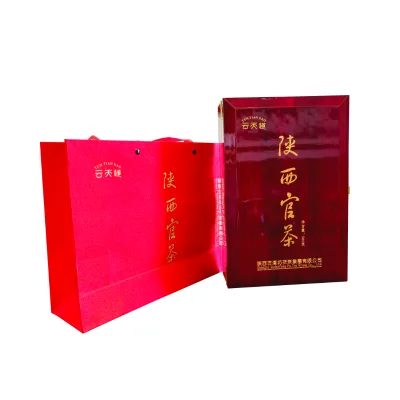
Comprehensive Sourcing Guide
Strategic Sourcing Guide for Organic Hand Made Steamed Green Tea
Understanding Product Attributes and Variants
When sourcing organic hand-made steamed green tea, buyers must first distinguish between the specific processing methods and product forms available in the current market. The core keyword implies a tea that is both organically certified and processed using a steaming technique, which preserves the fresh, grassy, and vegetal characteristics typical of high-quality green teas. Based on observed market data, the product landscape includes distinct categories such as "Broken Green Tea" and whole leaf varieties, with specific models like LHGT6001, LHGT6002, and LHGT6003 representing different grades or styles of green tea.
A critical observation in the supply chain is the variation in tea style. While the target keyword specifies "hand made," the market data indicates a mix of "Loose Tea" and "Tea Bag" formats. Buyers should verify if the specific supplier's "hand made" claim applies to the rolling and shaping process of loose leaf tea or if it refers to the assembly of tea bags. The attribute "Broken Green Tea" suggests that some offerings may be fragmented leaves, which are often used for tea bags or lower-grade loose teas, whereas whole leaf varieties are preferred for traditional steeping. Furthermore, the presence of "Organic White Tea" and "Herbal Tea" in the same dataset highlights the need for precise filtering to ensure the procurement matches the specific "Green Tea" requirement. The "Steamed Green Tea" attribute is explicitly noted as a capability, confirming that the processing method of steaming, rather than pan-firing, is available for certain models.
Technical Specifications and Processing Standards
Technical due diligence is essential when evaluating organic steamed green tea. The fundamental material source is identified as "Fresh Tea Leaf," which is the primary raw material for all green tea varieties. The physical appearance of the tea leaves is a key quality indicator; observed data lists "Flat" as a specific appearance attribute, which is characteristic of certain steamed green tea styles where leaves are flattened during processing. The taste profile is described as "Smooth," a desirable trait that suggests a lack of astringency, often resulting from careful steaming and oxidation control.
Packaging specifications vary significantly across suppliers, impacting both logistics and product integrity. Observed packaging formats include "Carton," "Cartons," "Box," "Bag," "Bags," "Bottle," "Bulk," and "Gift Pack." For organic products, the packaging must be airtight to prevent moisture absorption, which can degrade the "Fresh Tea Leaf" quality. Some suppliers offer specific unit standards such as "2g*20teabags/bag" or "30g," while others operate on bulk metrics like "35kg/bag" or "55kg/bag." The "Shelf Life" for these products is consistently observed as "3 Years" or "3 Year," indicating a robust stability profile if stored correctly. Buyers must ensure that the chosen packaging standard aligns with their distribution channel, whether it is retail gift boxes or bulk industrial bags.
Compliance, Certification, and Regulatory Standards
For organic products, compliance is not merely a preference but a regulatory necessity. The market data explicitly references "EU Standard" and "Organic White Tea (EU Standard)," indicating that suppliers are capable of meeting rigorous European organic certification requirements. While the specific keyword focuses on green tea, the presence of these standards suggests that the supply chain infrastructure supports organic certification. Buyers must verify that the specific "Organic Green Tea" they intend to purchase holds equivalent certification status.
The "EU Standard" reference is a high-confidence fact that buyers should use as a benchmark. However, it is crucial to note that not every product listed in the general category may carry this specific certification. Buyers should request proof of organic certification that covers the entire supply chain, from the farm in "China" or "Zhejiang" to the final packaging facility. The origin locations observed include "China," "Zhejiang," and "Hunan," which are major tea-producing regions. The geographical origin can influence the specific terroir and processing nuances, but the organic certification is the primary compliance metric. Additionally, some products list a "prod_standard" of "100g/ctn" or "250g/bag," which serves as a quality assurance metric for weight consistency, a critical factor in international trade compliance.
Cost Drivers and Procurement Economics
The economic landscape for organic hand-made steamed green tea is defined by a wide range of variables. The observed price range in the market spans from $1.2 to $150.34 USD. This significant variance is driven by factors such as the grade of the leaf (whole leaf vs. broken), the level of organic certification, the packaging complexity (e.g., gift boxes vs. bulk bags), and the specific processing method. The "Broken Green Tea" variants are likely positioned at the lower end of this spectrum, while premium "Loose Tea" or "Tea Bag" products with specialized packaging may command higher prices.
Minimum Order Quantities (MOQ) are another critical cost driver. The observed MOQ range is extensive, spanning from 1 unit to 1000 units. This flexibility allows buyers to test the market with small orders or commit to larger volumes for better unit economics. Specific products, such as the "Stomach Care Tea" or herbal blends, may have an MOQ of "100 Bags," which serves as a baseline for entry. Buyers should calculate the total landed cost, including the unit price, shipping, and potential tariffs, rather than focusing solely on the FOB price. The "Customization" attribute being "Available" suggests that buyers can negotiate packaging and labeling, which may incur additional costs but can be essential for brand alignment.
Supplier Evaluation and Operational Capabilities
Evaluating suppliers requires a focus on their operational capacity and transparency. The data indicates that suppliers offer "Customization" services, which is a strong indicator of a flexible manufacturing partner capable of meeting specific buyer requirements. The "Deliver Time" is observed as "15 Days" for certain products, suggesting a relatively quick turnaround for standard orders, though this may vary for customized or bulk shipments.
When assessing suppliers, buyers should prioritize those who can demonstrate a clear link between their production facilities and the "Fresh Tea Leaf" material. The origin locations of "Zhejiang" and "Hunan" are significant, as these regions are renowned for tea production. A supplier's ability to provide traceability from these specific origins adds value. Furthermore, the variety of "prod_model" codes, such as GTSW002-1, GTSW0021, and GTSW007, indicates a structured product catalog. Buyers should request detailed specifications for each model to ensure the "Style" (Loose Tea vs. Tea Bag) and "Type" (Green Tea vs. Herbal Tea) match their needs. The presence of "Organic White Tea" and "Herbal Tea" in the same supplier portfolio suggests a diverse capability, but buyers must ensure the specific green tea line is not an afterthought in their production schedule.
Quality Control and Long-Term Procurement Strategy
Quality control for organic steamed green tea must address both sensory attributes and physical stability. The "Taste: Smooth" and "Appearance: Flat" attributes serve as baseline quality indicators. However, buyers should implement their own sensory testing protocols to verify these claims, as taste is subjective and highly dependent on brewing parameters. The "Shelf Life" of 3 years provides a window for inventory management, but buyers should monitor storage conditions to ensure the "Fresh Tea Leaf" quality does not degrade over time.
For long-term procurement, establishing a consistent supply chain is vital. The availability of "Carton," "Box," and "Bag" packaging options allows for scalability. Buyers should consider the "MOQ" flexibility when planning their inventory; starting with a lower MOQ (e.g., 100 bags) allows for market testing before committing to larger volumes (up to 1000 units). The "Customization" option should be leveraged to create unique product identities, such as specific gift packs or branded tea bags. Additionally, buyers should verify the "prod_standard" for weight consistency, as variations in bag weights (e.g., 250g vs. 1kg) can affect pricing and customer satisfaction.
Comparative Analysis of Product Models
To facilitate decision-making, the following table compares key attributes of observed product models relevant to organic steamed green tea sourcing. This comparison highlights the diversity in packaging, standards, and origins.
| Product Model | Primary Type | Packaging Format | Origin Location | Key Standard/Spec | MOQ Observation |
|---|---|---|---|---|---|
| LHGT6001 | Green Tea | Cartons | China | EU Standard | Variable |
| LHGT6002 | Green Tea | Cartons | China | EU Standard | Variable |
| LHGT6003 | Green Tea | Cartons | China | EU Standard | Variable |
| GTSW002-1 | Green Tea | Bag or Gift Box | Zhejiang | 35kg/bag, 250g/bag | Variable |
| GTSW0021 | Green Tea | Bags | Zhejiang | 50g/bag, 1kg/bag | Variable |
| GTSW007 | Green Tea | Bag, Bottle, Box | Hunan | 250g/bag, 1kg/bag | Variable |
| herbal tea | Herbal Tea | 100bags/Carton | China | 100g/ctn | 100 Bags |
| tea leaf | Green Tea | Bag, Bottle, Box | China | 30g | Variable |
This table illustrates that while the core product is green tea, the packaging and origin vary significantly. Models LHGT6001 through LHGT6003 appear to be bulk-oriented with carton packaging, whereas GTSW models offer more diverse packaging options including gift boxes and bottles. The "herbal tea" model explicitly lists an MOQ of 100 bags, providing a concrete benchmark for entry-level orders. Buyers should use this data to align their procurement strategy with their specific volume and packaging requirements.
Final Procurement Considerations
In conclusion, sourcing organic hand-made steamed green tea requires a balanced approach that considers technical specifications, regulatory compliance, and economic factors. The market offers a wide range of options, from broken green tea to whole leaf varieties, with origins in China, Zhejiang, and Hunan. Buyers must verify organic certification, particularly against the "EU Standard," and ensure that the "Fresh Tea Leaf" quality is maintained through appropriate packaging and storage. The "Customization" availability and flexible MOQs provide opportunities for tailored procurement strategies. By carefully evaluating the product models and adhering to the observed standards, buyers can secure a reliable supply of high-quality organic green tea that meets both market demands and regulatory requirements. The long-term success of this procurement depends on maintaining clear communication with suppliers regarding quality control, shelf life, and delivery timelines to ensure consistent product performance.
FAQs
What packaging formats are available for organic green tea?
Suppliers offer diverse packaging including cartons, boxes, bags, bottles, and gift packs. Some specific models use bulk bags like 35kg or 55kg, while others provide smaller retail units such as 250g bags or 1kg bags. Buyers should verify the specific format required for their distribution channel.
Can I customize the product specifications and packaging?
Yes, customization is available for many organic green tea products. Buyers can request specific packaging types like gift boxes or branded tea bags. This flexibility allows for tailored branding but may impact the final unit price and lead time depending on the order volume.
What is the shelf life of the organic steamed green tea?
The observed shelf life for these products is consistently three years. This duration applies to both loose tea and tea bag formats when stored correctly. Buyers should ensure packaging remains airtight to maintain the freshness of the tea leaves throughout this period.
Which certifications are available for organic green tea products?
Products can meet the EU Standard for organic certification, as indicated by specific listings. While some items are labeled as Organic White Tea, the supply chain supports organic green tea compliance. Buyers must verify that the specific green tea model holds the equivalent organic status.
How does the MOQ vary for different green tea models?
Minimum Order Quantities range from 1 unit up to 1000 units depending on the supplier and product type. Some specific items like herbal blends have an MOQ of 100 bags. Buyers can start with lower volumes to test the market before committing to larger bulk orders.
Where are the organic green tea products sourced from?
Products originate from China, with specific regions including Zhejiang and Hunan. These locations are major tea-producing areas known for fresh tea leaf quality. The geographical origin can influence the specific taste profile and processing nuances of the steamed green tea.
What is the typical delivery time for these orders?
The standard delivery time observed for certain products is 15 days. This timeline applies to standard orders but may vary for customized requests or large bulk shipments. Buyers should confirm the exact lead time with the supplier before finalizing their procurement schedule.